Go Further Than the Circuit

Six days skiing the Dolomites: a glacier summit, a fifteenth-century chapel reached by gondola, a horse-drawn tow across a frozen valley, and everything the Sellaronda leaves behind.

Fifteenth-century chapel, La Crusc, Badia
The Dolomites, Italy March 12–19, 2024

Everyone skis the Sellaronda. We did that on day one. That left us five more days.

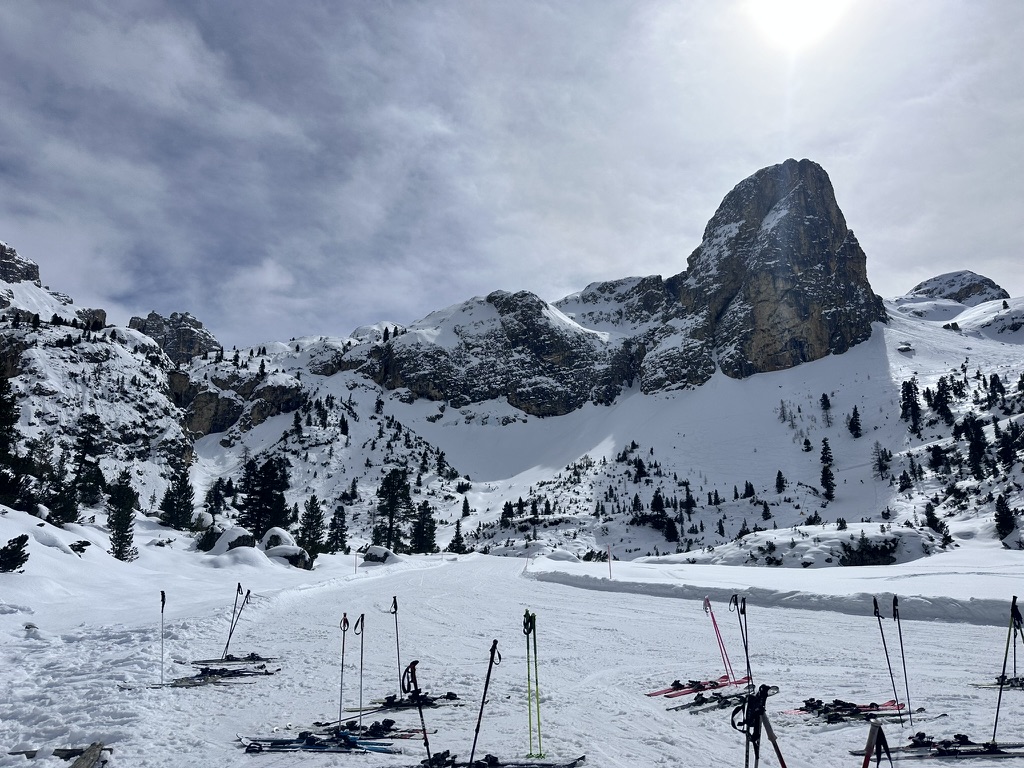
Cinque Torri, threading past WWI trenches on piste. Spaghetti at 2,407 meters. Marmolada, the last skiable glacier in the Dolomites. A horse-drawn tow across the valley floor for five euros. Soft-boiled eggs before first chair, unprompted. Hugo spritzes at Club Moritzino après. A lift-served fifteenth-century chapel found through our chalet hostess's subtle suggestion. A wellness refuge on a campground. A last-minute detour to the hometown of our great-grandparents. This is what going further than the circuit gets you.

At a Glance
VerdictPlace
OverratedCortinaIf you've been to a luxury European mountain town, you've essentially been to Cortina.
UnderratedNatura Wellness CentreOn a campground in Alta Badia. Thirty euros. Dry and wet saunas, a relaxation room, hot tea after six hours on skis.
Surprised UsMarmoladaThree cable cars to a summit where birds circle below you. Stephanie shakes the platform railing while Jonathan reconsiders his life choices. The only powder run of the trip waits on the way down.
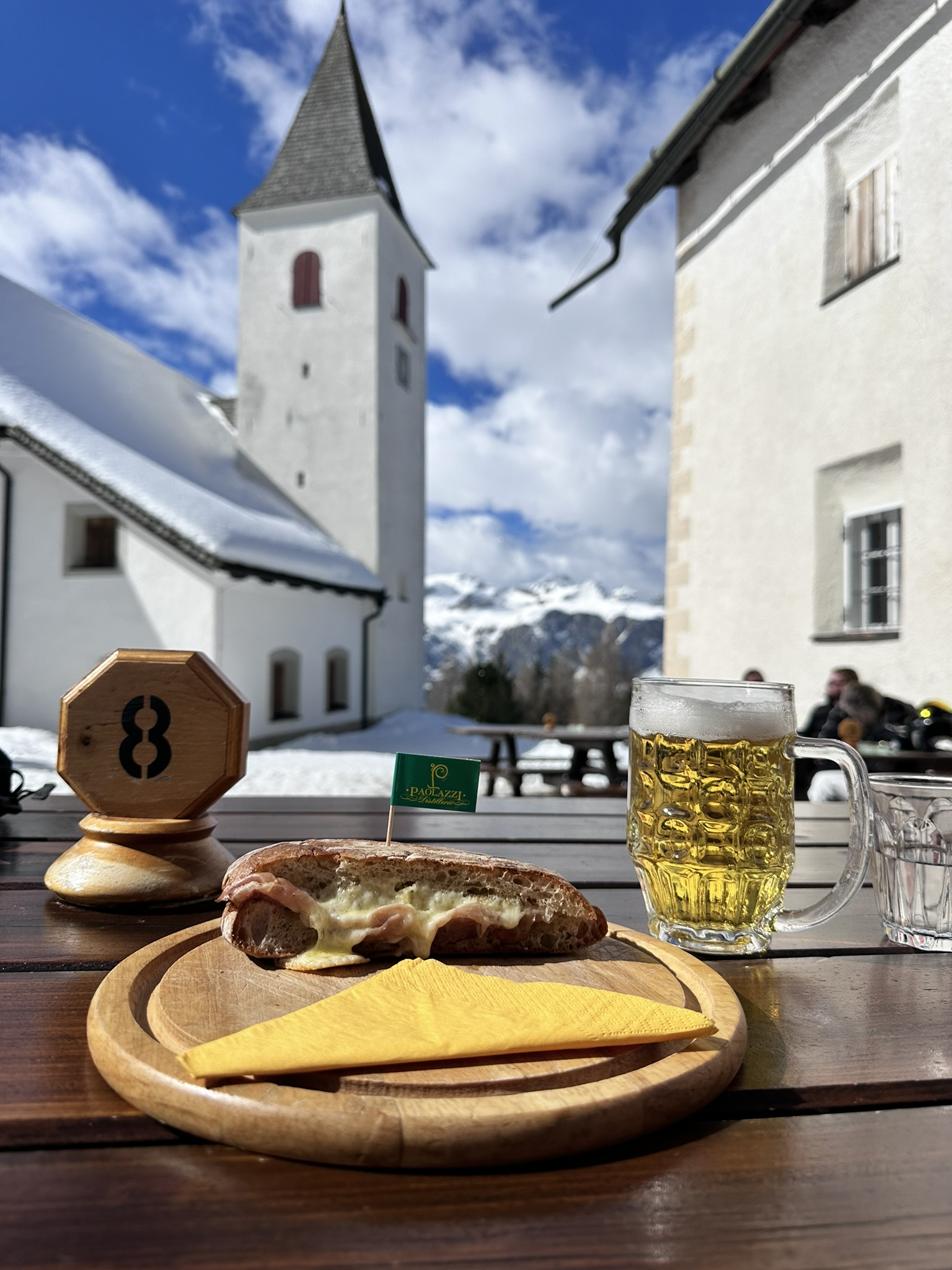
The FindLa CruscOur host paused over her map, then pointed. A muddy lot, one gondola, a hike through trees that parted onto a white chapel alone against raw rock. We ordered paninis from a wooden hut and stayed until we ran out of reasons to leave.
The Route
Venice to Corvara, the high routes, and the turn south to Padova.
• • •

Corvara

Skis in tow, we grabbed a rental car from Marco Polo International and made an impromptu stop in Treviso (the better version of Venice, and the radicchio capital of Italy) before heading north. Flat ground gave way to verticals.

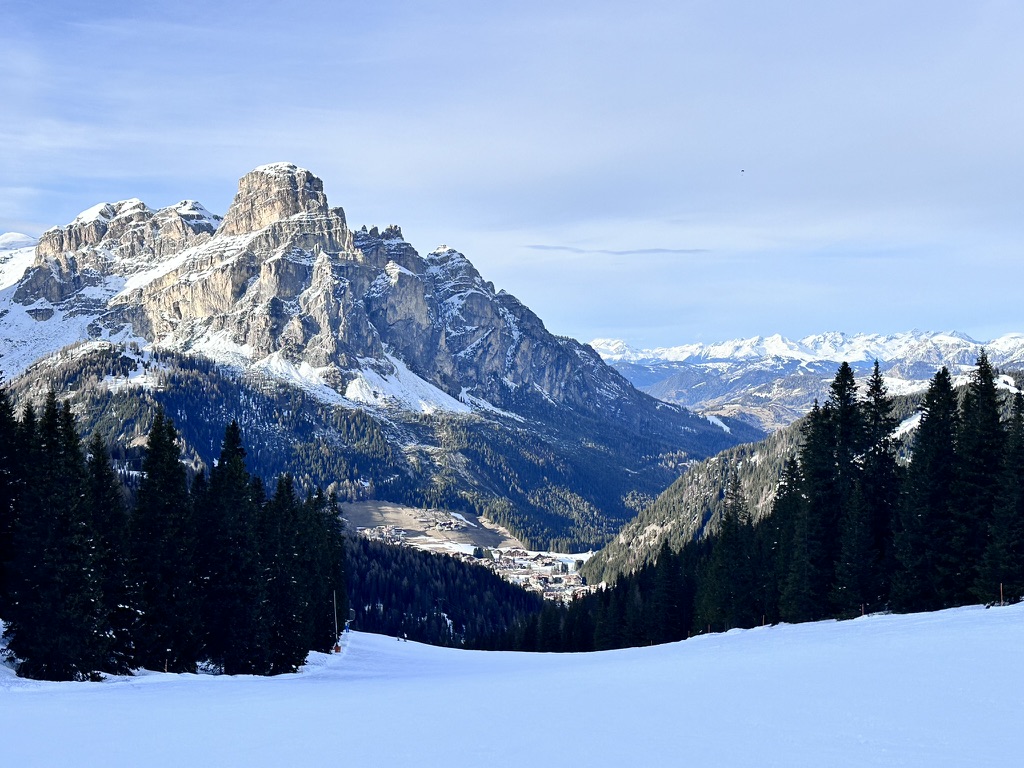
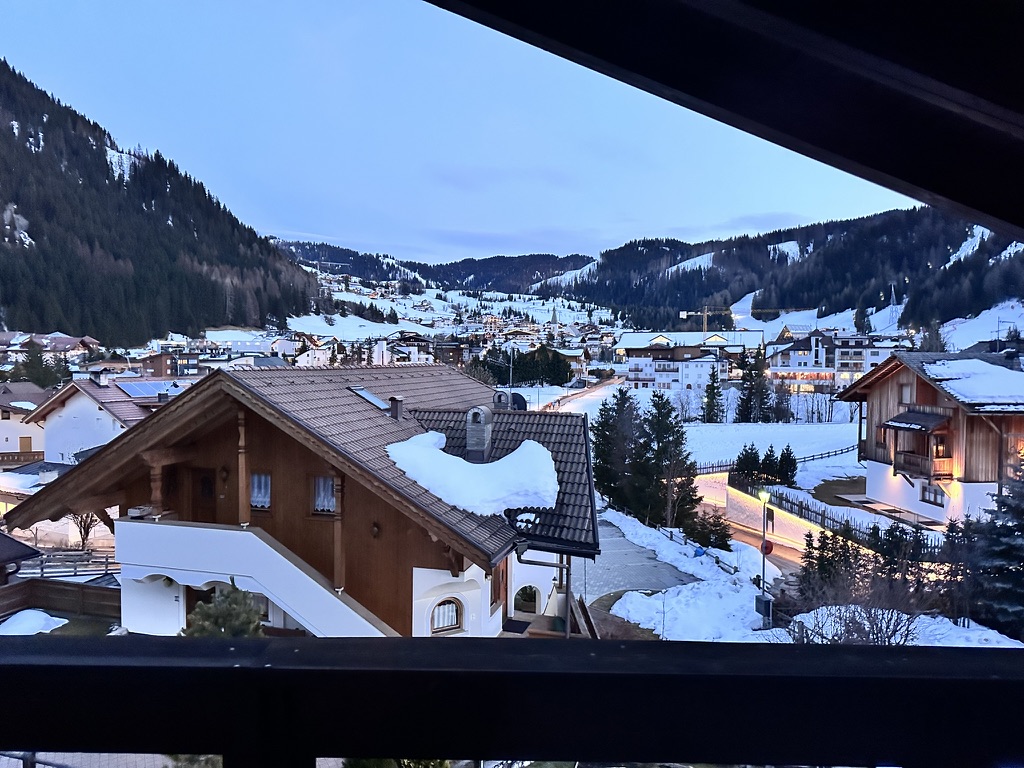
For too long into the drive we weren't sure we'd find snow. The lower resorts were dirt and rock, mid-March taking its toll. As the road climbed and kept climbing, snow slowly appeared on the shoulders, then the tree line, then everywhere. We crested the pass, and Corvara in Badia revealed itself in the valley below, twinkling at dusk.

Corvara in Badia at dusk

Jetlagged and past the point of speaking to each other, we checked into La Cianò, a quaint Italian alpine lodge. Our gracious Ladin host met us at the door. The Ladins are native to these valleys, an Alpine people whose language was here centuries before Italian.

We did everything in our power not to fall asleep standing up, found the only open restaurant, a pizzeria down the road, ate in silence, and passed out.

The next morning, we fell into the breakfast ritual. Cappuccinos in a small nook. Soft-boiled eggs, unprompted by day two.

The Sellaronda

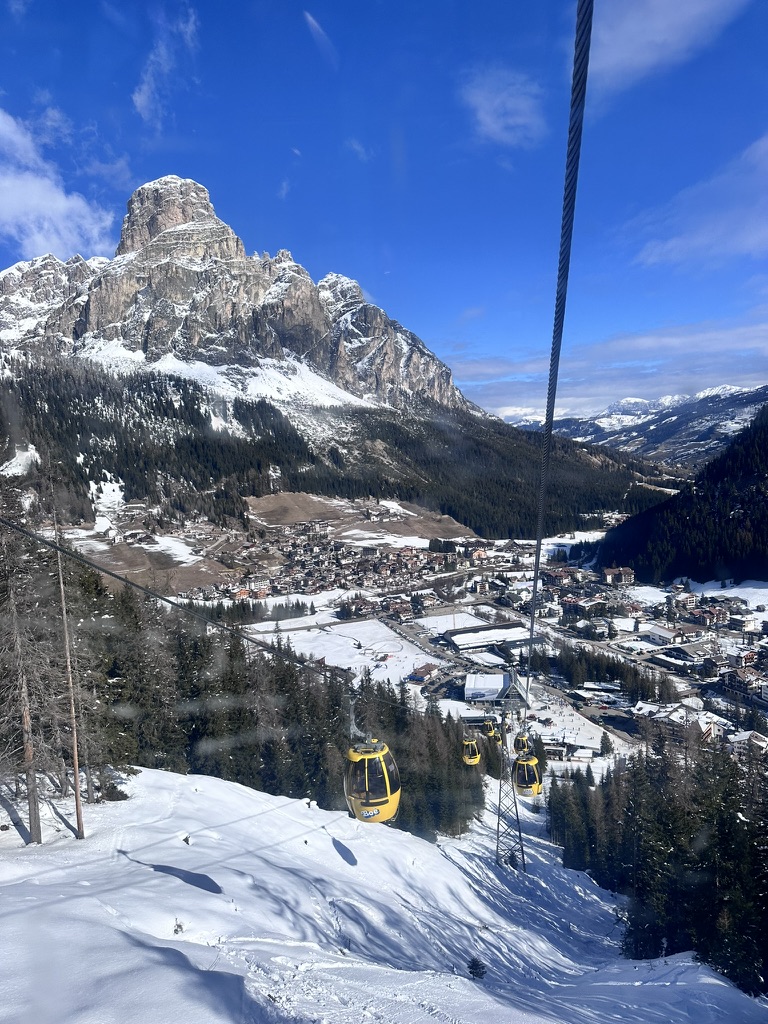
Since this was our first time in the area, there was only one way to begin: the Sellaronda. We clicked into our bindings at the Alta Badia base, a two-minute bus ride from La Cianò, loaded into the iconic yellow Boe gondola cabin, and set off on the six-hour orange route to get oriented.

Boe gondola with Corvara in the background

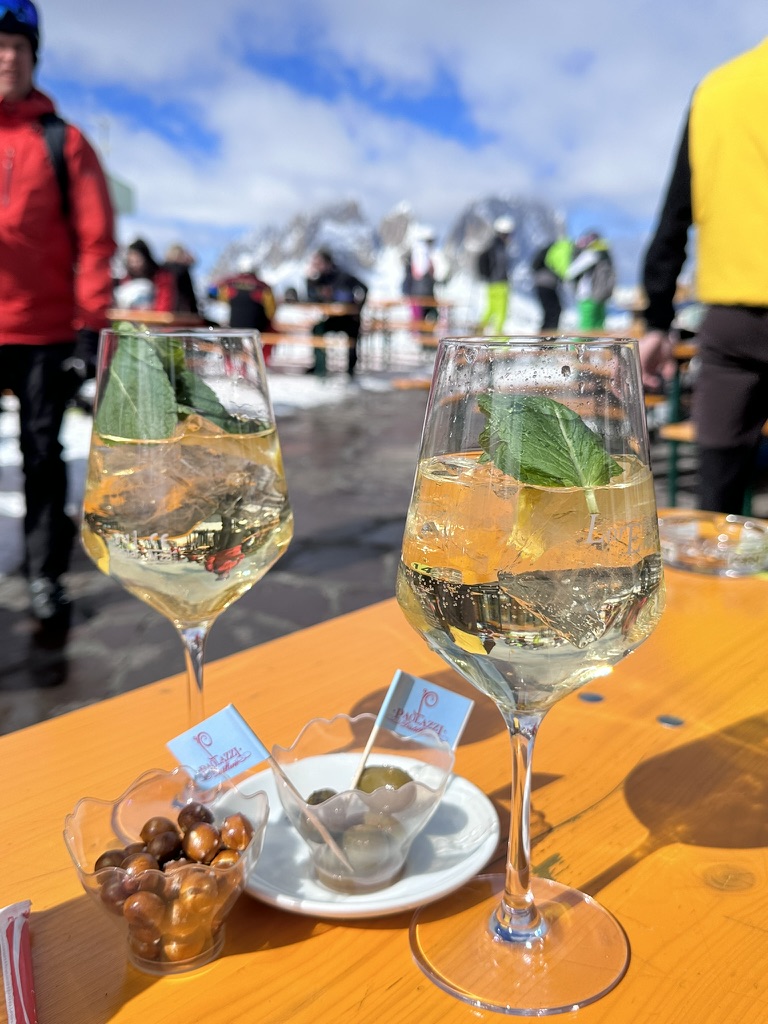
The circuit took us through four valleys: Alta Badia, Arabba, Val di Fassa, and Val Gardena. We paused in each one for a spritz, the views demanding it.

If you're a steep-and-deep skier, set your expectations. Scenery takes center stage here. Most runs skew toward the mellow side.

Arabba
Arabba
Halfway around the orange route, Val di Fassa
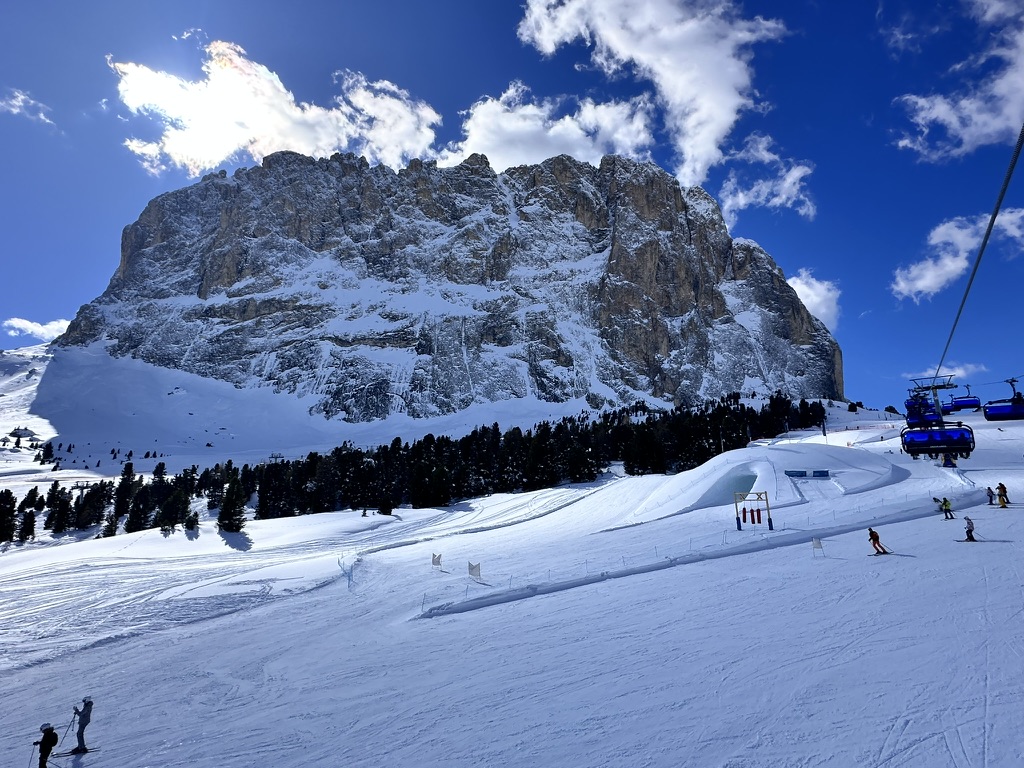
Sassolungo, on the descent to Passo Sella

When music started drifting off the patio of yet another rifugio, we knew where to go.

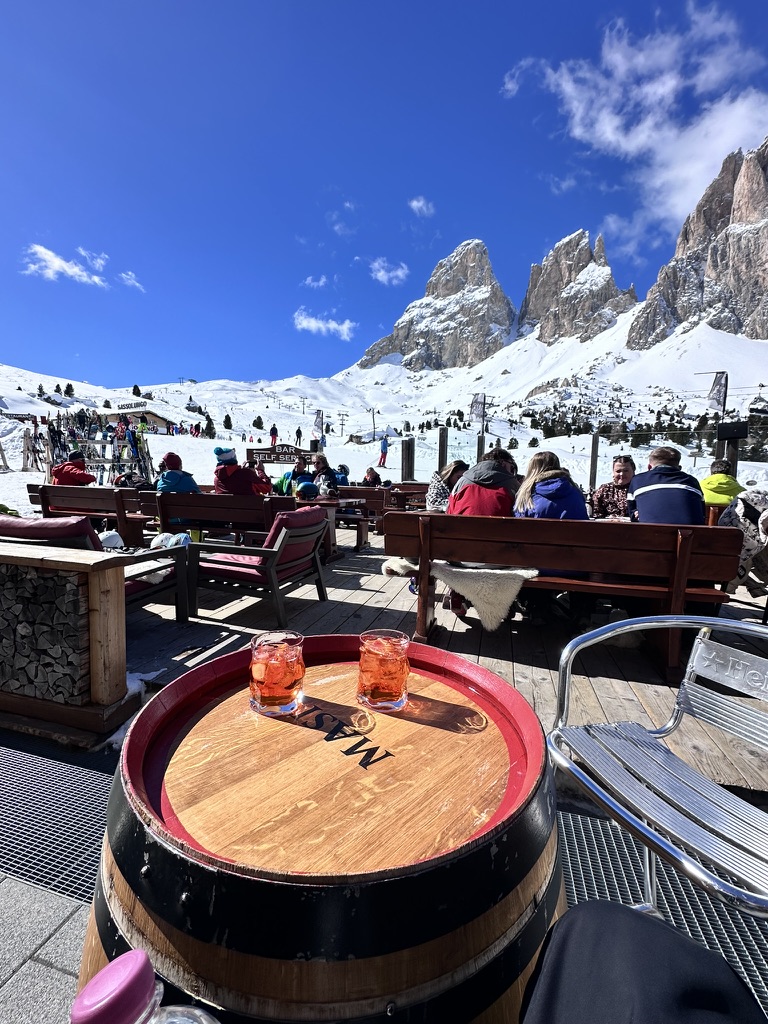
Passo Sella Lounge
Passo Sella Lounge

We took one last break on a patio, taking in the giant slab of mountain in front of us. There's something about that kind of scale that quiets everything down. As we looped back through Selva di Gardena, the sun dipping behind it, we were rewarded with the first day in the books and a lay of the land.

Toward Corvara, end of day one
• • •

Marmolada

One day in and the Dolomites had us. We rejoined the Sellaronda before peeling off at Arabba.

Arabba, towards Marmolada

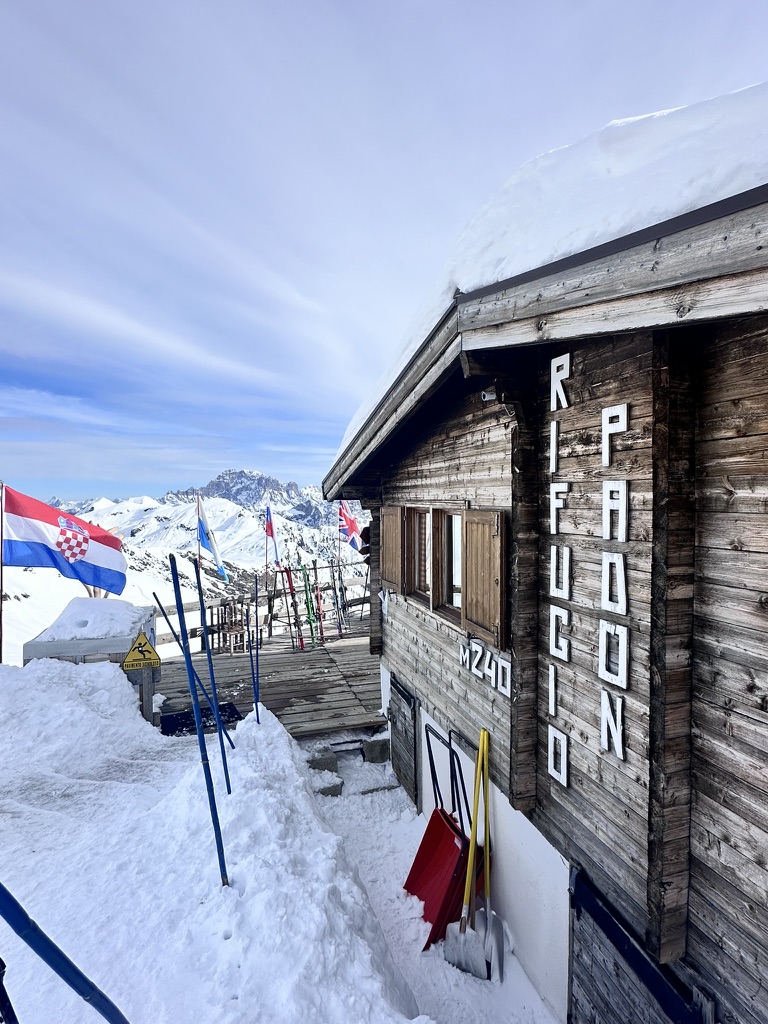
It's a bit of a trek to Marmolada from Corvara, and at about the halfway mark, hunger set in. Enter Rifugio Padon.

Rifugio Padon, where the Sellaronda and Marmolada part ways

Panoramic views at 2,407 meters paired with a bluebird day pulled us to the patio. Spaghetti, we learned, is a superior ski food: warm, saucy carbs that kept us full for most of the day.

Rifugio Padon is also a decision point. The Sellaronda continues in one direction. Marmolada is in the other. We chose Marmolada. Fewer people. The promise of powder in mid-March.

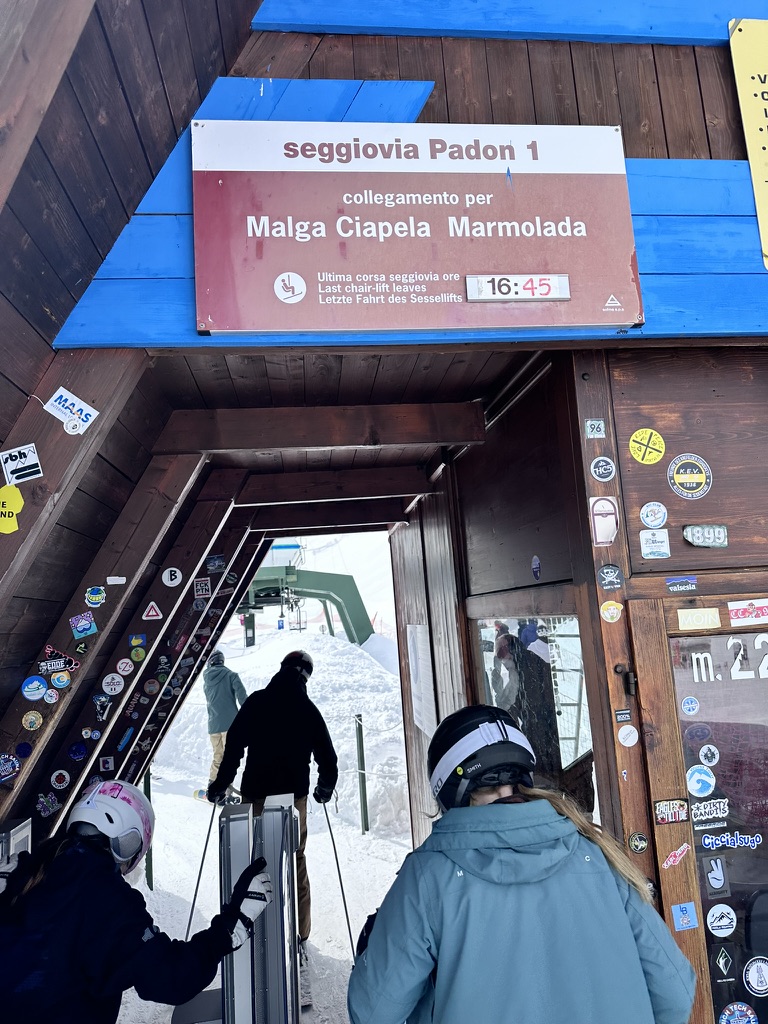
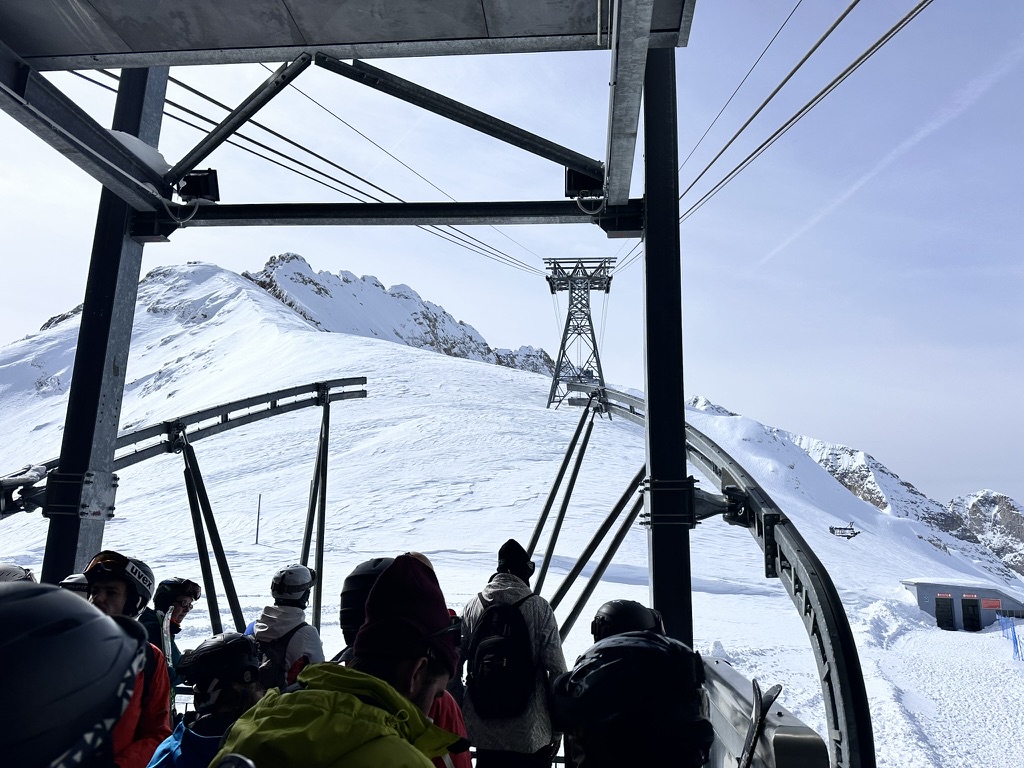
We descended to Malga Ciapela and joined the line, the snow turning slushier as we dropped toward the Marmolada base. Then three cable cars to the summit, each one steeper and more exposed than the last. We've taken trams at Snowbird and Jackson Hole, but this was a different planet. By the third cable car the ground beneath us had dropped away entirely.

Marmolada incoming
Marmolada incoming

An elevator at the top deposited us onto a viewing platform where the first thing we registered was altitude.

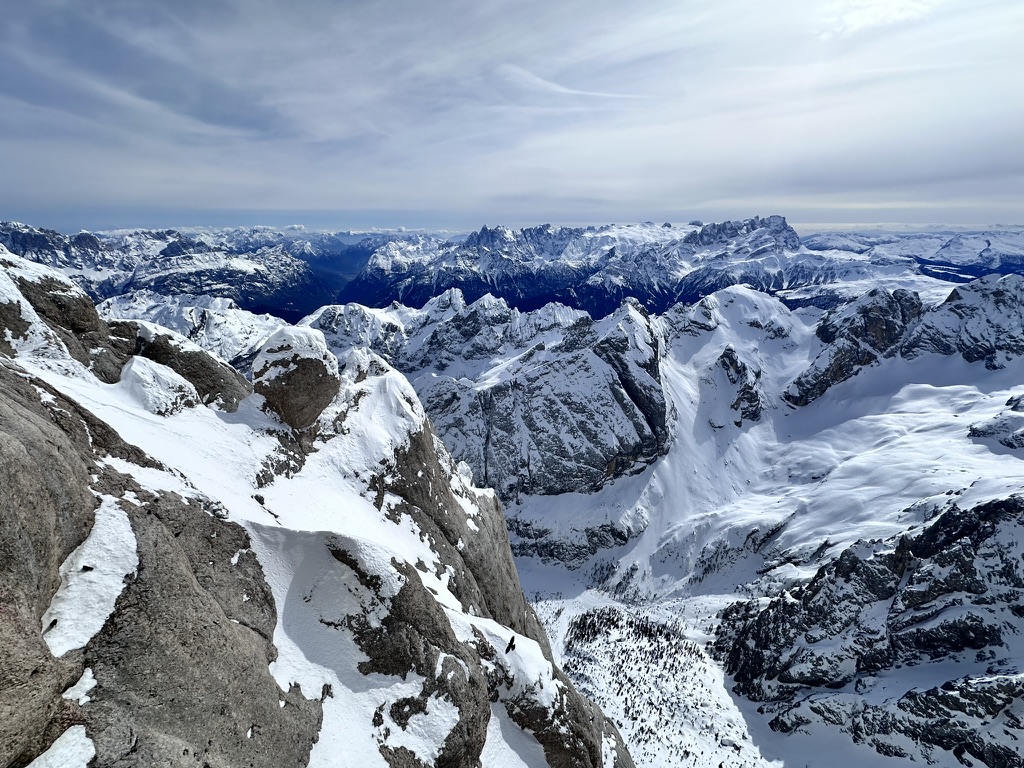
The Dolomites from the Marmolada platform

Alpine choughs circled below us. Not beside us. Below. Every peak in the Dolomites spread out in 360 degrees, crevices and ridgelines layered beneath us in every direction. Jonathan gripped the railing for a video. Stephanie shook it.

We took our time scanning the panorama as far left and as far right as it would go, then sat down with Aperol Spritzes from the bar one level below.

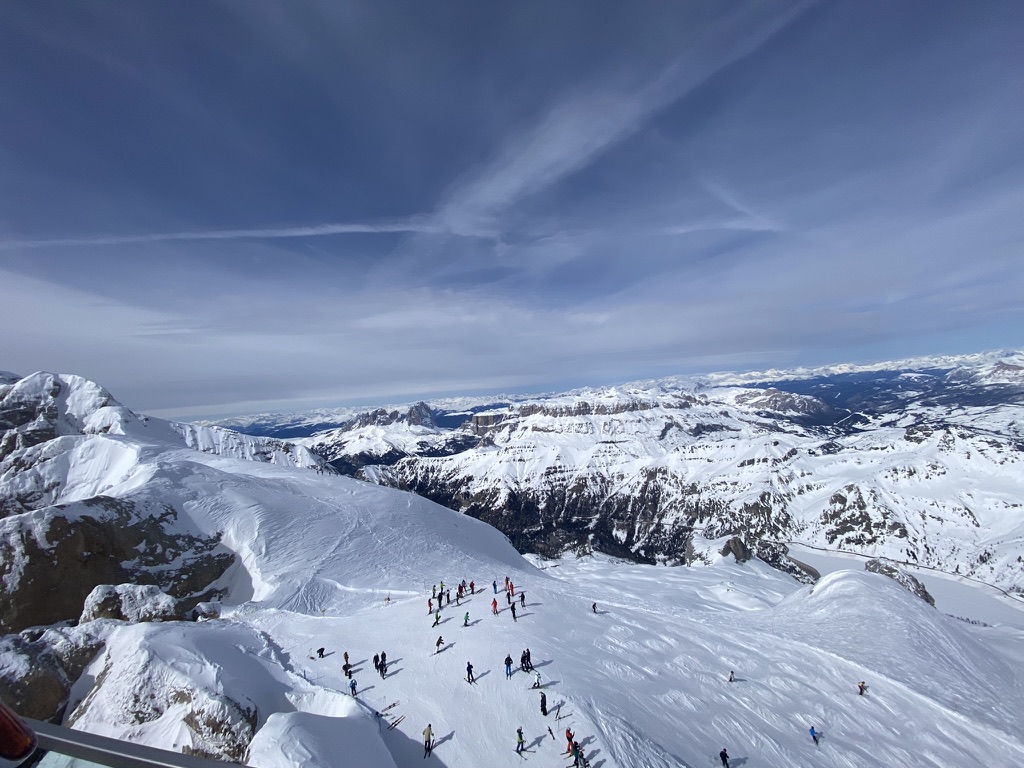
The ski down was a manageable red, wide enough to carve easily, with either side off piste providing the only real powder run of the trip.

The run down from Marmolada
• • •

Après and After Dark

Club Moritzino

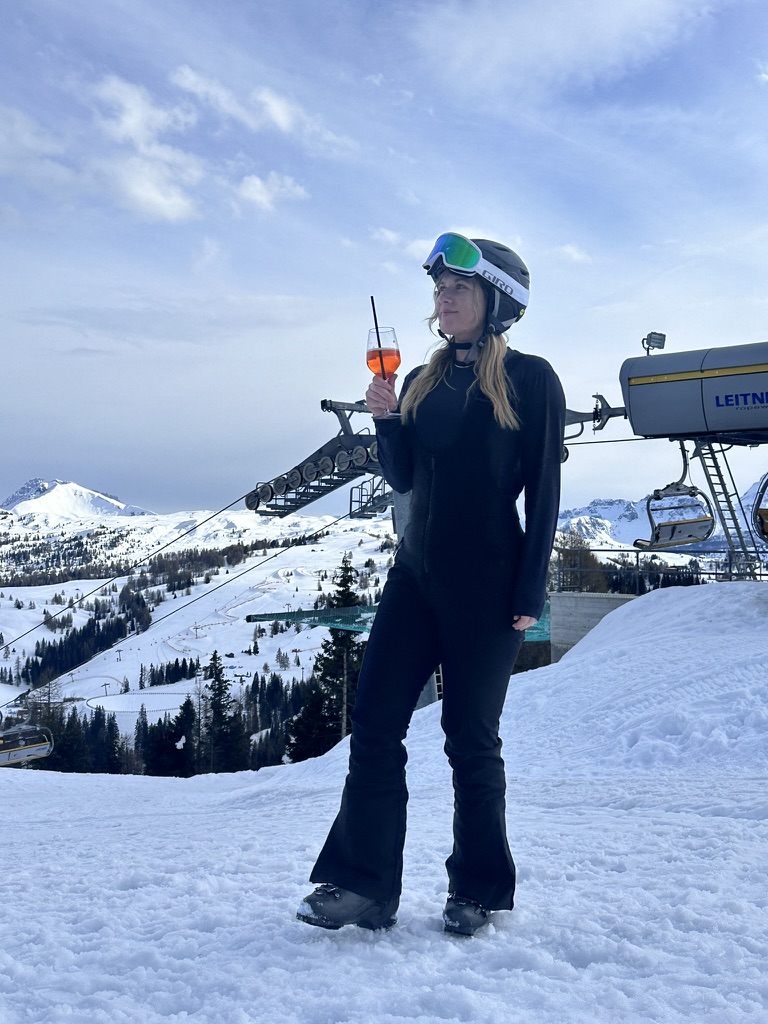
The mountain hummed beneath our skis as we made our way to Club Moritzino. Hugo spritzes in hand, we spilled onto the patio and sank into canvas deck chairs in the snow.

Stephanie, Club Moritzino

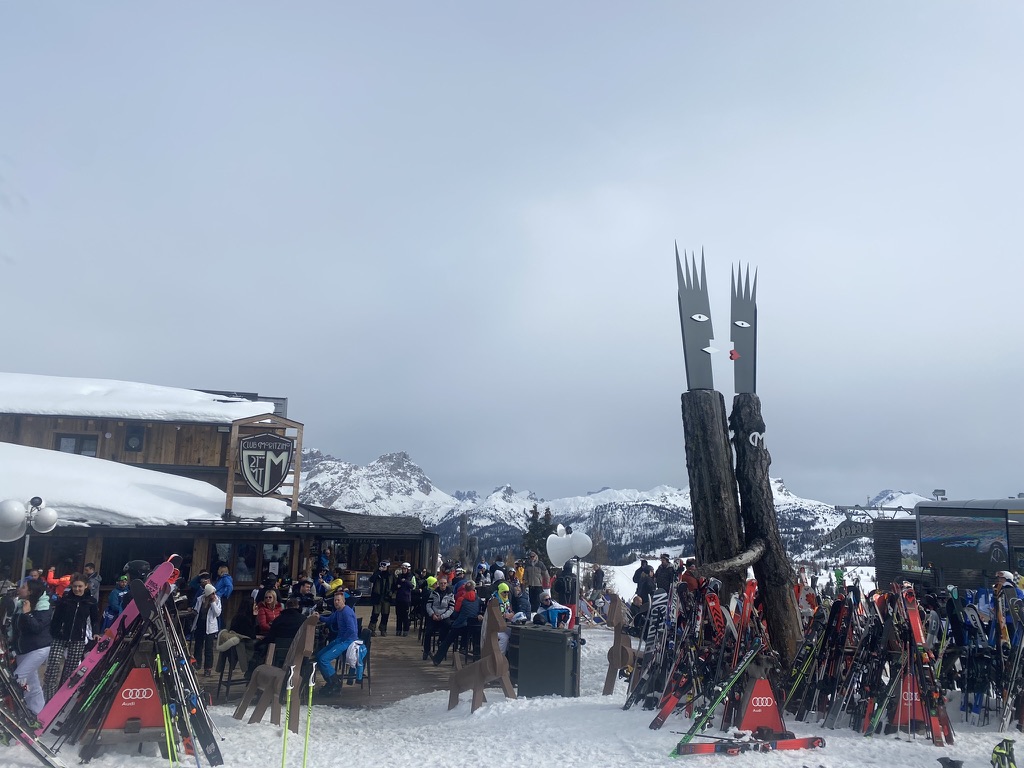
The DJ spun remixes that made us forget our legs were finished: sexy, propulsive, sans pretension. Helmets off, sunglasses on. The crowd was ski gear and stemware, everyone dancing or sprawled in chairs with the Dolomites behind them.

Club Moritzino
Club Moritzino
Dolce vita, sotto voce. When the runs started getting roped off, we took that as our cue to scurry down the mountain.

Cocun Cellar

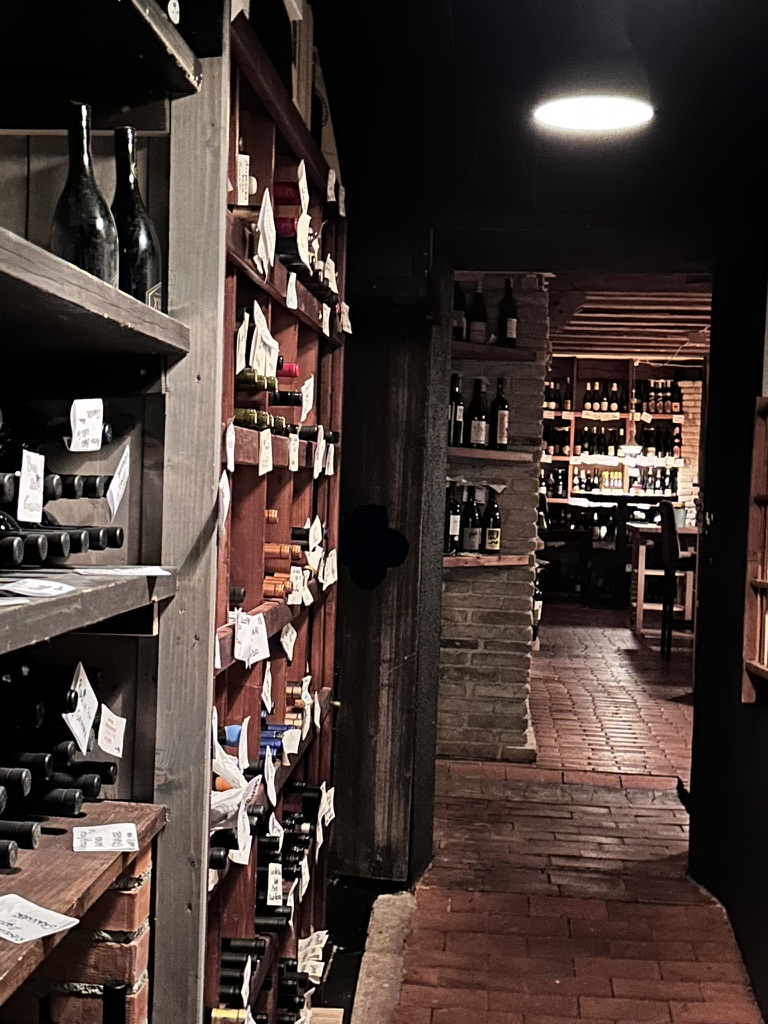
Dinner was Cocun Cellar in San Cassiano, a restaurant built into the wine cellar of Ciasa Salares. Cocun is "cork" in Ladin, and the room earns the name: dark stone, 24,000 bottles, a place that makes you slow down before the first course lands.

Inside the cellar, Cocun, San Cassiano

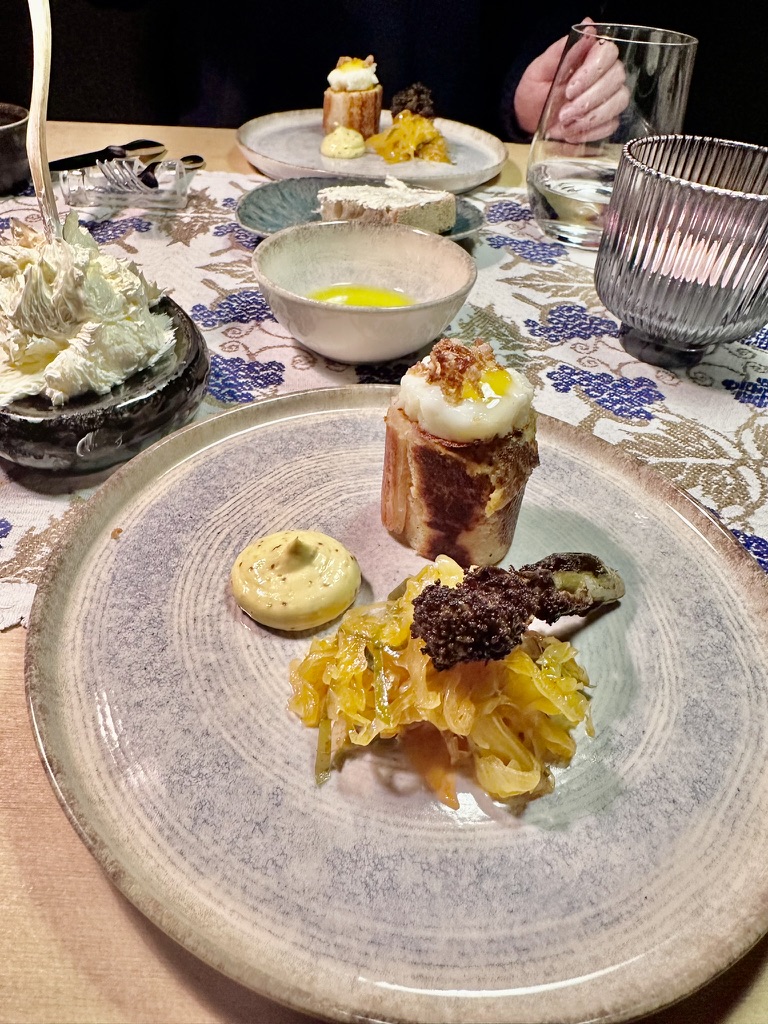
We opted for the five-course tasting menu (98 euros per person) with the optional wine pairing (60 euros per person).

Dinner at Cocun Cellar

Years later, it's still the dinner we reference when we reminisce about this trip.

L'Murin

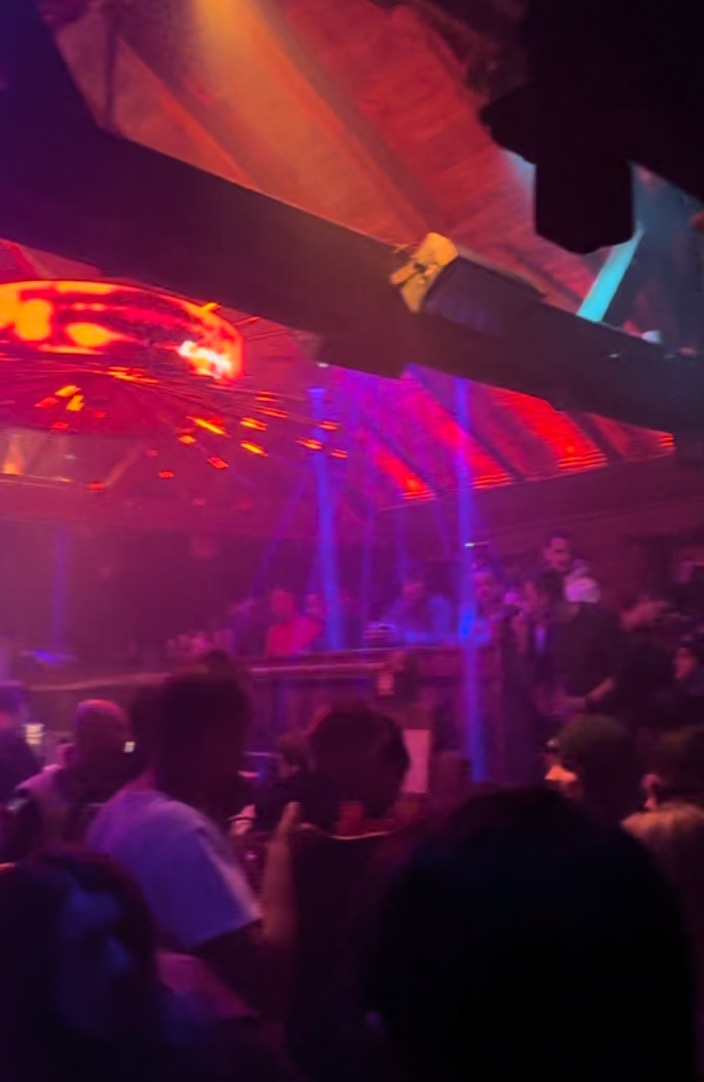
L'Murin is not Club Moritzino. Loud EDM, a young crowd, an energy that pulled us straight back to our study-abroad twenties.

L'Murin, later than we planned

This was not the sophisticated après of the mountain terraces. This was the part of the night where we stopped thinking about the next morning's first run and danced.

Natura Wellness Centre

Around day four of six, our legs were begging for a steam room, and La Cianò doesn't have one. Most hotel spas in the valley are guest-only, which left us searching.

We never thought we'd find the answer at a remote RV-focused resort. Unassuming on the outside, the interior of the Natura Wellness Centre exudes alpine sanctuary. Thirty euros grants access to dry and wet saunas and a relaxation room with complimentary tea and light refreshments, a seventeen-minute drive from La Cianò.

Keep in mind this is Europe, and the facilities are au naturel by default. Not strictly enforced.

• • •

La Crusc

We found La Crusc the old-fashioned way. Over breakfast, our Ladin host pulled out a paper map as big as the table and pointed.

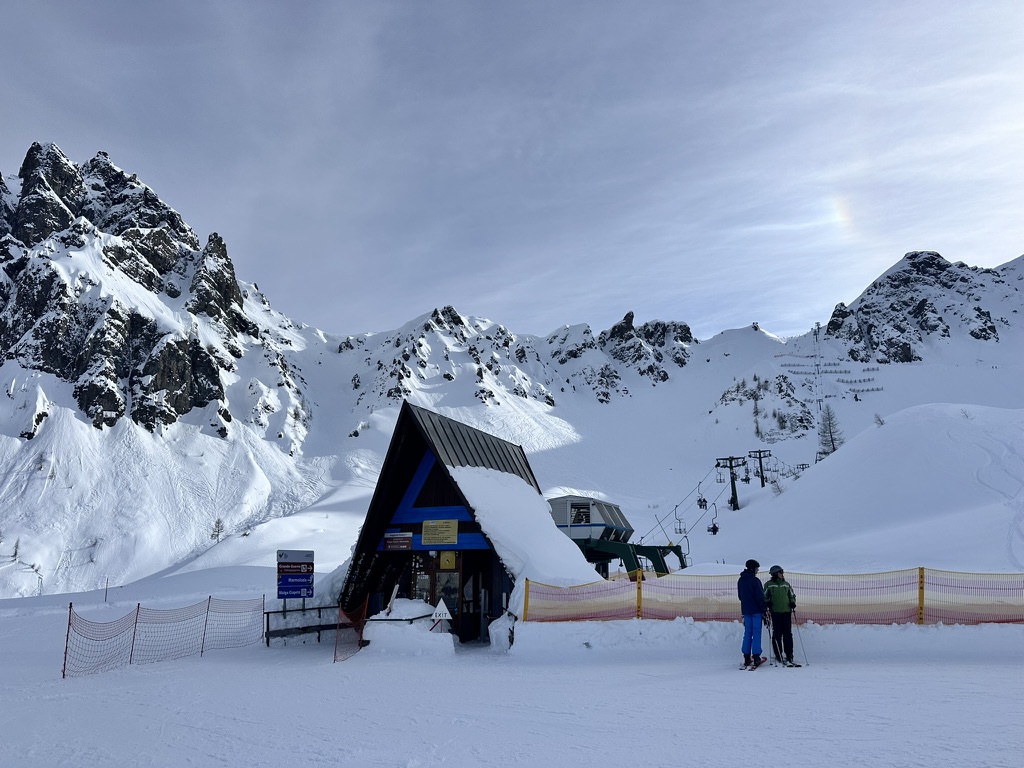
After checking out of La Cianò, we drove to a muddy parking lot at the base of a single gondola. Mid-March had turned the ground soft. Our ski boots sloshed through it.

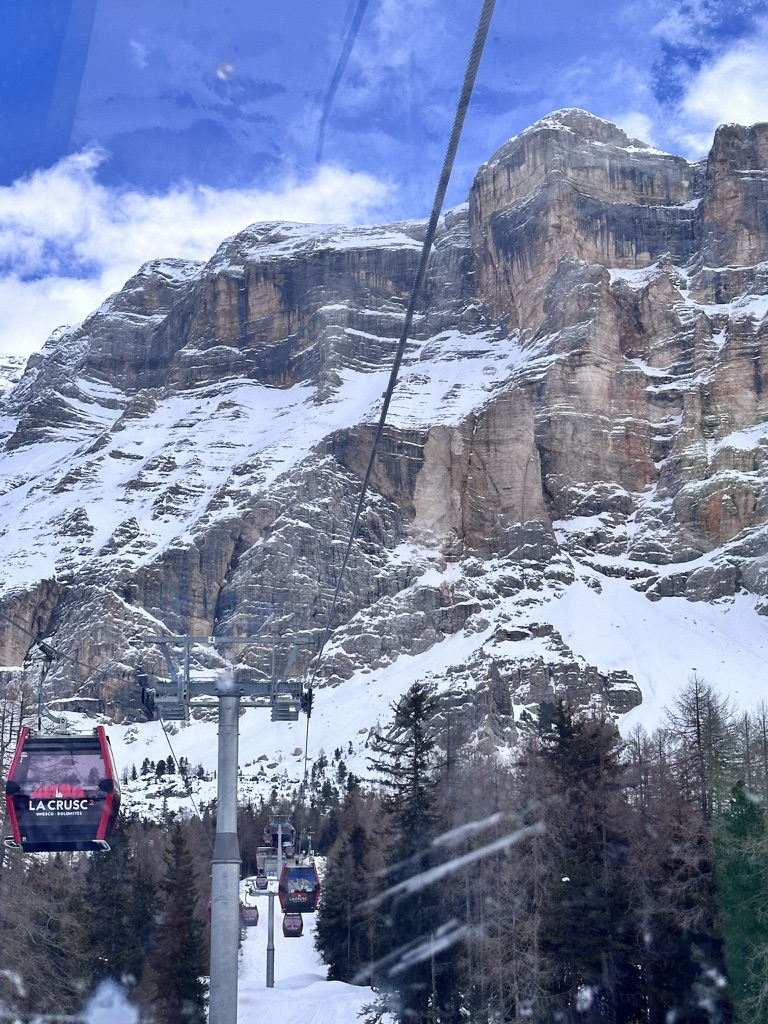
The La Crusc gondola

After exiting the gondola, we ascended on a short hike through the trees. The clearing came without warning. A small white fifteenth-century chapel sat alone at the base of the Santa Croce massif, dwarfed by the rock face behind it. Humble and welcoming, with a dramatic backdrop.

Next to the church, a rifugio with a counter and a small menu. We ordered beers and paninis and carried them to a wooden picnic table in the sun.

Lunch below the chapel, La Crusc

No crowds. No music. Just warmth and a view we hadn't earned through anything more than listening to the right person.

The pistes down were easy. We pointed the car toward Cortina.

Cortina

Cortina d'Ampezzo is beautiful and knows it. The main corso is lined with designer boutiques and the people look like they stepped out of a winter Vogue editorial. After four days in Corvara, a Ladin village small enough that our host knew our breakfast order by day two, Cortina felt like it had traded intimacy for polish. It's spread out in a way mountain towns shouldn't be, where we drove between stops instead of walking in ski boots. Worth seeing, but we were glad to have it as a base for Lagazuoi and Cinque Torri rather than the main event.

We checked into Hotel Menardi, a nineteenth-century hotel within walking distance of the center.

• • •

Lagazuoi

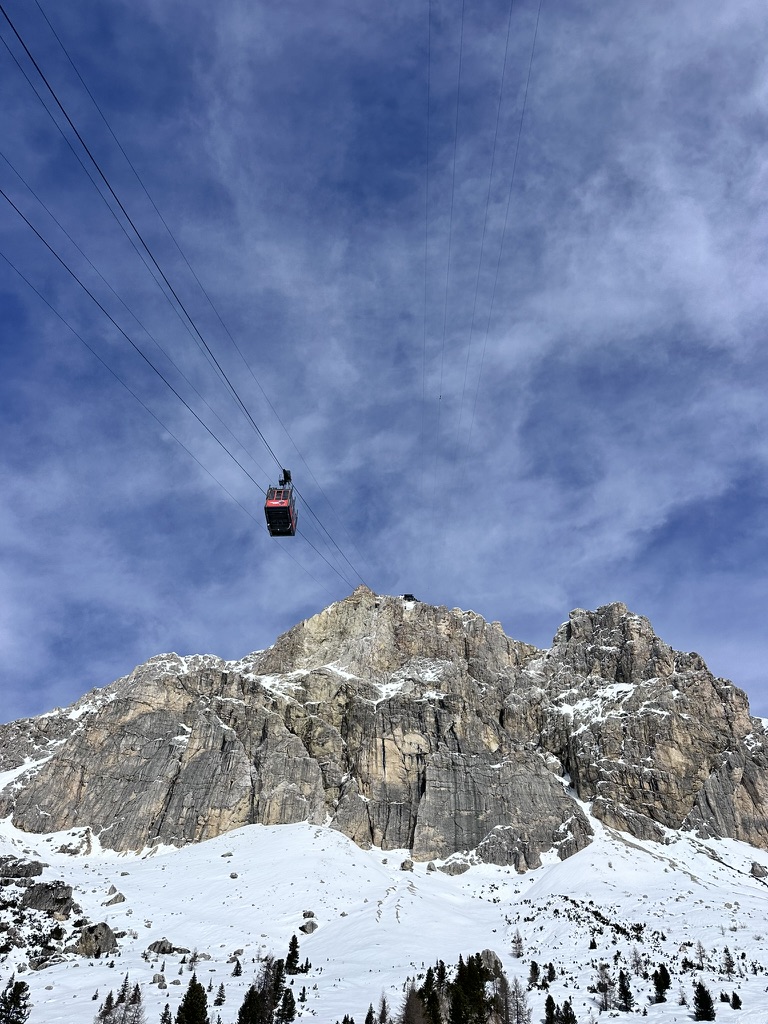
The cliff face from the base of Lagazuoi is sheer vertical rock, the top station visible the entire ride up in the cable car. Unlike Marmolada, where the summit kept hiding from us, here our eyes could grasp the altitude the whole way.

Looking up from the Lagazuoi base toward the Armentarola

Campari sodas at the Lagazuoi Terrace Bar. Views of the peaks, including a fresh perspective on the Marmolada, before setting off on the Lagazuoi piste.

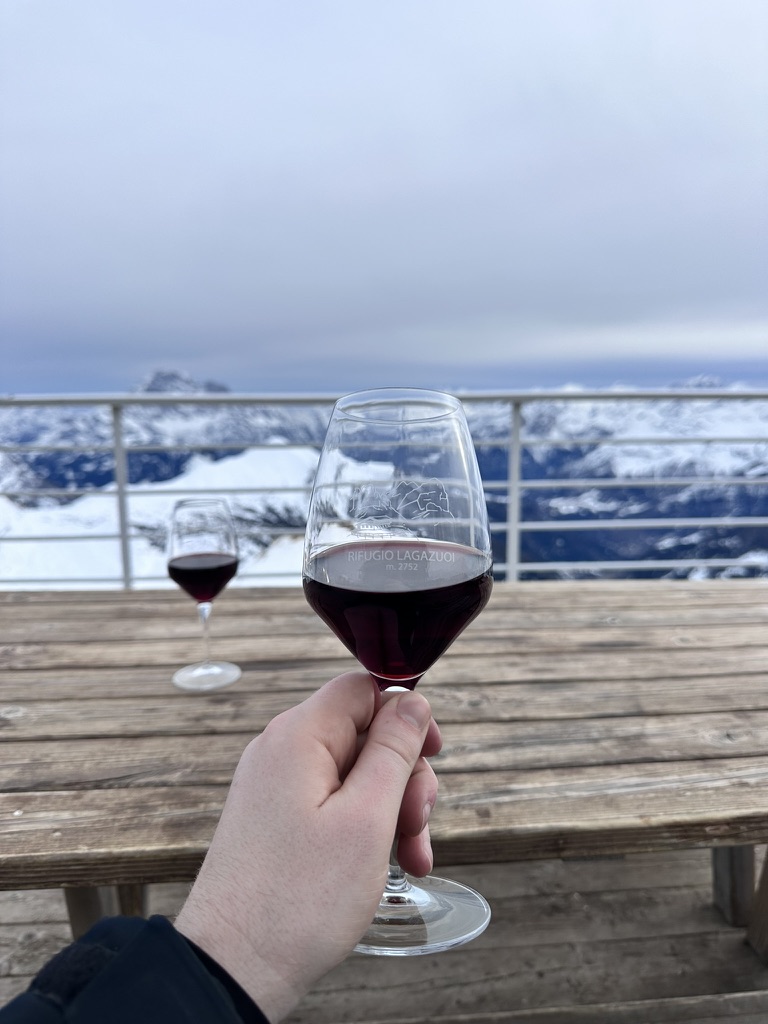
The second time up, we hiked to Rifugio Lagazuoi and switched to red wine, the cliff face now behind us, the valley spread below. Looking out over the Armentarola, the run we were about to drop into.

Red wine at Rifugio Lagazuoi

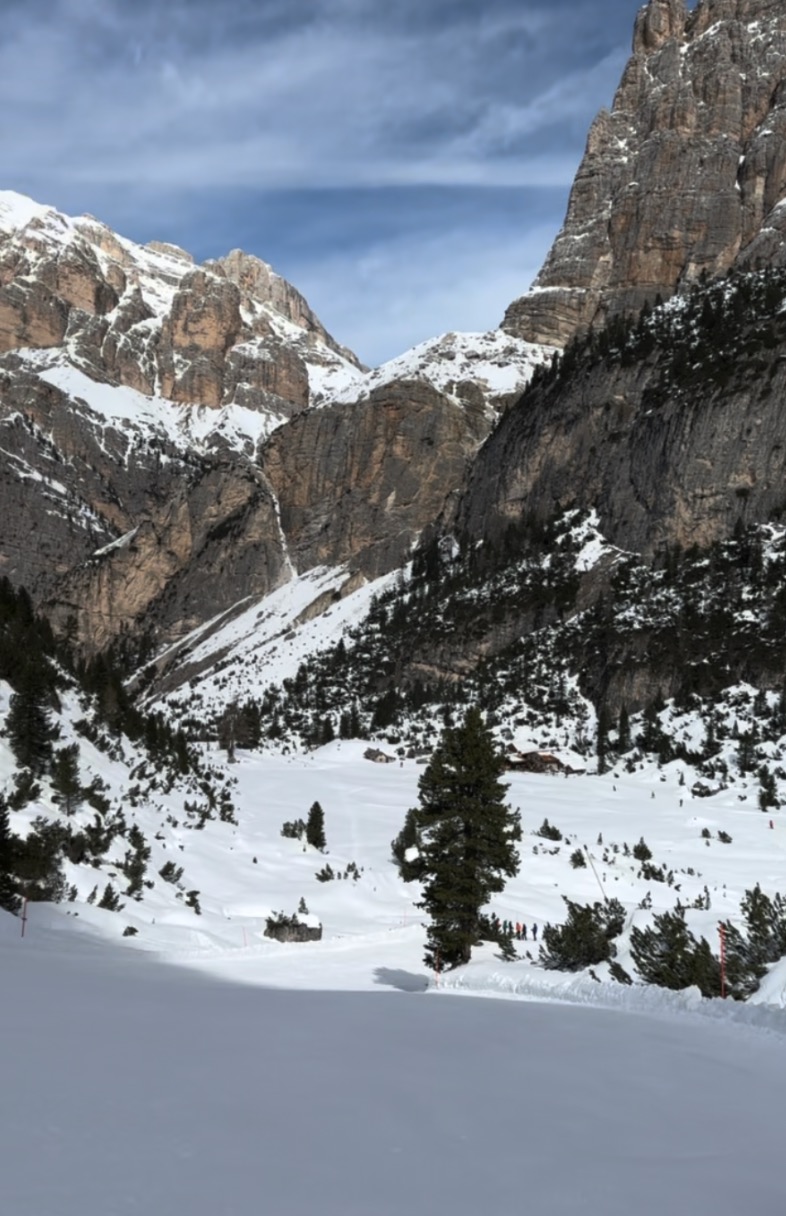
The Armentarola is eight kilometers of descent that moves between ridgelines. The run narrowed and widened but kept us within its corridor. It hugged more than confined. Gentle and scenic.

Armentarola
Armentarola

The snow held for most of it, carveable and forgiving, before the altitude dropped and everything turned heavy.

At the bottom waited La Ütia, a wood-heavy, unhurried rifugio. Rows of skis and poles signaled everyone else was thinking the same thing. A pause.

Looking back at the first half of the Armentarola from La Ütia

We ordered a cheese plate of local mountain cuts with chutney and pickled peppers, spritzes, and espressos. The perfect assortment for relishing the beauty of the last run.

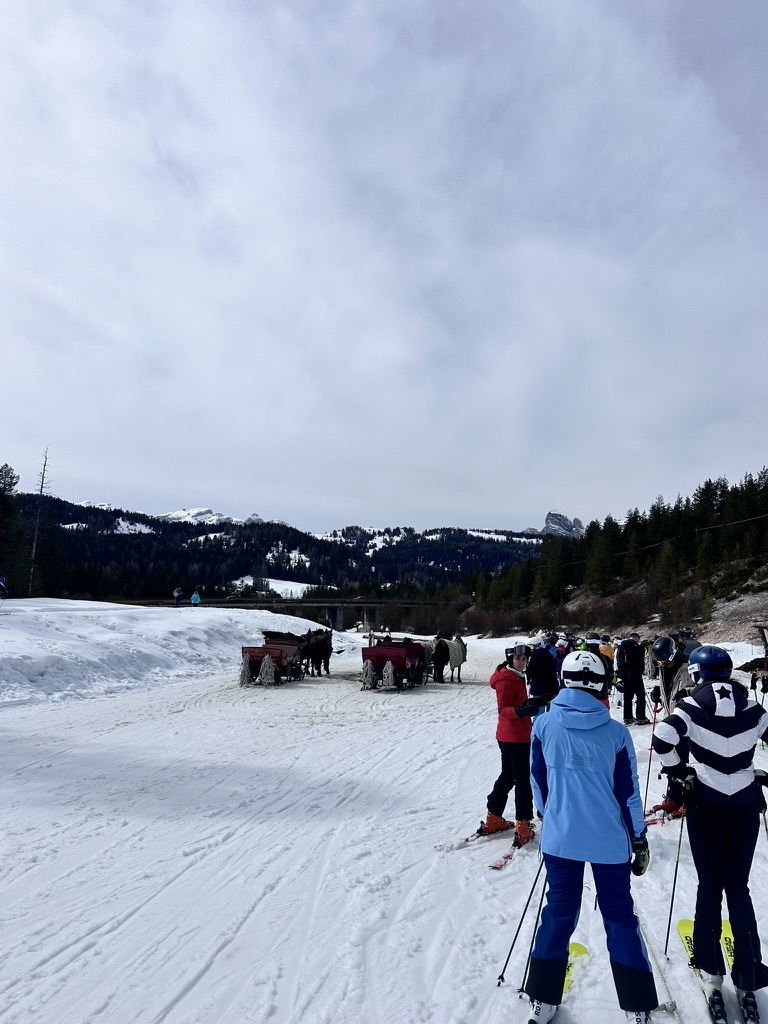
From La Ütia, the valley floor was flat, wet, and done. Getting back to the Alta Badia lifts meant either a taxi or horses. Multiple horses lined up with a single rope strung between handles on either side.

The horse tow across the valley floor, Armentarola
We grabbed on, poles in one hand, rope in the other, and were towed across 1.5 kilometers of valley floor on our skis. Five euros.
• • •

Cinque Torri

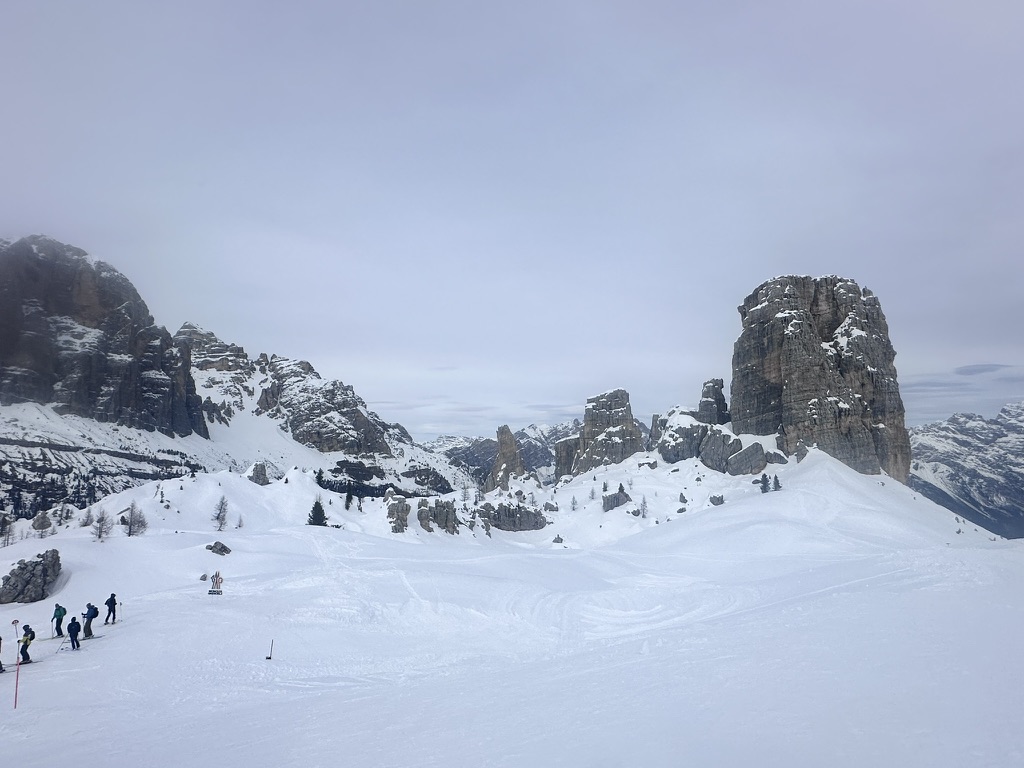
Cinque Torri sits just below Lagazuoi: five rock towers rising above pistes that thread past actual WWI trenches. Jonathan went solo while Stephanie rested. He came back and immediately said we needed to return, that it couldn't be missed. The next morning we drove back so Stephanie could ski it.

The five towers of Cinque Torri

It was worth it, though it feels strange to say so. There's something unresolved about carving turns through a battlefield, feeling the joy of the mountain and the weight of it at the same time. Unlike anything we've experienced before.

• • •

Padova

Not in the original plan. Over dinner, the question came up: where to go for the final night. Jonathan, eyes wide, said, "Wait, Padova?" Out of the way to the Venice airport. The question lingered for about thirty seconds. It was the only logical choice. The chance to see the city of our great-grandparents outweighed convenience. We're saving Padova for its own piece. It earns one.

Practical Considerations

Getting there

Fly into Venice Marco Polo and rent a car. Ours was a manual Lancia Ypsilon through Avis, US$220 for the week, which is all the car the passes require. Chains were provided, but if the forecast calls for snow we suggest a 4x4. The drive to Corvara runs about two and a half hours: flat Veneto farmland, then the road climbs and does not stop. If the lower valleys look bare in March, keep driving. The snow finds you above 1,500 meters.

Flights

A cash fare from the East Coast in March typically runs $600 to $1,000 round trip into Venice. Full disclosure: we flew standby on family airline benefits, which means our flights cost close to nothing and our dates flexed around open seats.

Where we stayed
PropertyDatesNightsCost
La Cianò, Corvara in BadiaMar 12–164US$526
Hotel Menardi, Cortina d'AmpezzoMar 16–182US$427
Art Hotel Al Fagiano, PadovaMar 18–191US$111

La Cianò works out to roughly $130 a night with breakfast, in high season, minutes from the lifts. That rate is not a typo. It is what booking small and family-run gets you in Alta Badia, and the soft-boiled eggs come with it.

Lift access

We never bought a lift ticket in Italy, but that line deserves an honest footnote. Dolomiti Superski is an Ikon Pass partner: seven days across all twelve resorts on the full pass, five on Base, no blackout dates. We hold full Ikon passes for our home season in California and Utah, which run north of $1,200, so our Dolomites days cost nothing on top of what we were already spending. Without an Ikon, buy the Dolomiti Superski pass outright: day passes run 77 to 86 euros, a four-day pass is 317, and six days lands around 450. Booking online two or more days ahead saves five percent. Don't buy an Ikon for this trip alone; do consider the Dolomites if you already have one.

Dining

Rifugio lunches ran 20 to 30 euros a person: spaghetti, a spritz, an espresso. Dinners averaged 40 to 60 euros, from a village pizzeria on arrival night to the tasting menu at Cocun Cellar, 98 euros per person (60 for the optional wine pairing) and worth every cent. With breakfast included at La Cianò, plan on 60 to 90 euros per person per day, depending on how seriously you take dinner.

Evenings in Cortina

Faro, a cocktail bar off Largo delle Poste, pours an actual craft cocktail list in a town that mostly pours spritzes. Go after dinner; it's the one room in Cortina that trades polish back for intimacy.

When to go

Mid-March bought us near-empty pistes, long sun, and snow that softened by early afternoon. Below the tree line the cover was thinning; above it, Marmolada and Lagazuoi held. If powder is the priority, go in January or February. If the high routes and the patios are, mid-March treats you well, and the season-end lodging and pass deals start around then.
The Bottom Line

The Numbers
Accommodation7 nights, 2 people — US$1,064 total, averaging US$152 per night
FlightsJFK–Venice, budget $600 to $1,000 cash. Full disclosure: we used family airline benefits.
Rental car6 days — US$220
Lift passDolomiti Superski, 6 days — €0 on top of our full Ikon passes. Outright: about €450.
Dining€60 to €90 per person per day
Per personRoughly US$1,100 to $1,400, excluding flights

Hits

The tasting menu at Cocun Cellar. Five euros for a horse to tow you across the valley floor.

Misses

The Cortina corso at peak hour. Skiing below the tree line after 2 PM in mid-March.

The Unexpected

Jonathan skied Cinque Torri alone while Stephanie rested, past stone trenches dug in 1915, and came back saying we had to return. So the next morning we drove back from Cortina, against the direction of the trip, so she could ski it too. Nothing about the circuit asks you to double back. That is exactly why we did. The best things in the Dolomites are the ones you turn around for.